News
More-
1) Please introduce yourself. Name- Pagmadulam Sukhbaatar Age- 35 Family members- 4 (father, mother, youngersister) 2) Where is your working place back in your country and what is your specialty? Cardiologist at Mongolia Japan Hospital of Mongolian National University of Medical Sciences 3) How did you get to know Severance? Why did you choose Severance as your training hospital? The Korean Heart Rhythm Society has maintained a collaborative partnership with the Mongolian Society of Cardiologists, and since 2015, its teams have visited Mongolia twice annually to perform catheter ablation procedures in cooperation with Mongolian physicians. 4) How long is your training period in Korea? 1 year 5) Which area did you focus on during your fellowship at Severance? During my fellowship, my main focused on clinical cardiac electrophysiology, including the diagnosis and management of cardiac arrhythmias, comprehensive electrophysiology, including catheter ablation of various arrhythmias as well as cardiac implantable electronic device management. 6) What is the most impressive feature of Severance Hospital? The most impressive feature of Severance Hospital is its ability to combine advanced medical technology with a strong academic and mentoring culture. The EP laboratory operates at an exceptionally high level, supported by state-of-the-art mapping systems, well-organized workflows, and a highly skilled multidisciplinary team. What truly distinguishes Severance, however, is the commitment of senior faculty to education. Professors actively involve fellows in clinical decision-making and procedural planning, creating an environment where learning is continuous, structured, and deeply practical. This balance between innovation, efficiency, and education makes Severance a world-class training institution. 7) What are the specific contents of your fellowship program at Severance? My fellowship program at Severance Hospital focused on comprehensive clinical cardiac electrophysiology. During the one-year training period, I participated in diagnostic electrophysiologic studies, catheter ablation procedures for atrial fibrillation, supraventricular tachycardia, and ventricular arrhythmias, as well as three-dimensional electroanatomical mapping and cardiac implantable electronic device management. In addition, I was involved in peri-procedural patient management, outpatient arrhythmia clinics, and device follow-up. Regular academic conferences, case discussions, and journal clubs further strengthened my understanding of evidence-based practice and enhanced my clinical judgment and procedural skills. 8) If you were to get the chance to come back, which field of clinical study would you like to focus on? If I were given the opportunity to return to Severance Hospital, I would like to further focus on advanced cardiac electrophysiology, particularly complex atrial fibrillation and VT ablation. I am especially interested in refining ablation strategies for challenging cases and learning more about optimizing EP laboratory workflows and procedural efficiency. This advanced training would be highly valuable, as my home institution is preparing to establish a new EP laboratory. The expertise gained at Severance would directly contribute to improving patient safety, procedural outcomes, and the overall quality of arrhythmia care in Mongolia. 9) Who are you most thankful for at Severance(who helped you the most) & why? I am deeply grateful to Professor Hui Nam Pak, Professor Chun Hwang, and the entire EP laboratory team at Severance Hospital. Their guidance, patience, and dedication to teaching played a crucial role in my professional development. The professors consistently encouraged critical thinking and provided clear explanations during complex procedures. In addition, the nurses, technicians, and fellow trainees created a supportive and collaborative working environment. Their teamwork and professionalism not only enhanced my learning experience but also demonstrated the importance of patient-centered care and mutual respect in advanced clinical practice. 10) What was your first impression of Korea? My first impression of Korea was a strong sense of order, efficiency, and respect. I was impressed by how smoothly systems functioned, both within the hospital and in daily life. In the medical environment, professionalism, punctuality, and attention to detail were clearly emphasized. At the same time, I found it remarkable how traditional values coexist harmoniously with modern technology and advanced medicine. This balance was reflected in the respectful interactions among healthcare professionals and in the strong work ethic that characterizes Korean society as a whole. 11) What is the best memory so far during your stay here? My best memory during my stay in Korea has been working as a member of the EP laboratory team at Severance Hospital. Being part of a highly organized, collaborative, and supportive team made every clinical day a valuable learning experience. I particularly appreciated the open communication between professors, fellows, nurses, and technicians, which fostered both professional growth and mutual trust. Participating in complex procedures and academic discussions as part of this team gave me a strong sense of belonging and left a lasting impression on my career and personal development.
Apr 1, 2026
-
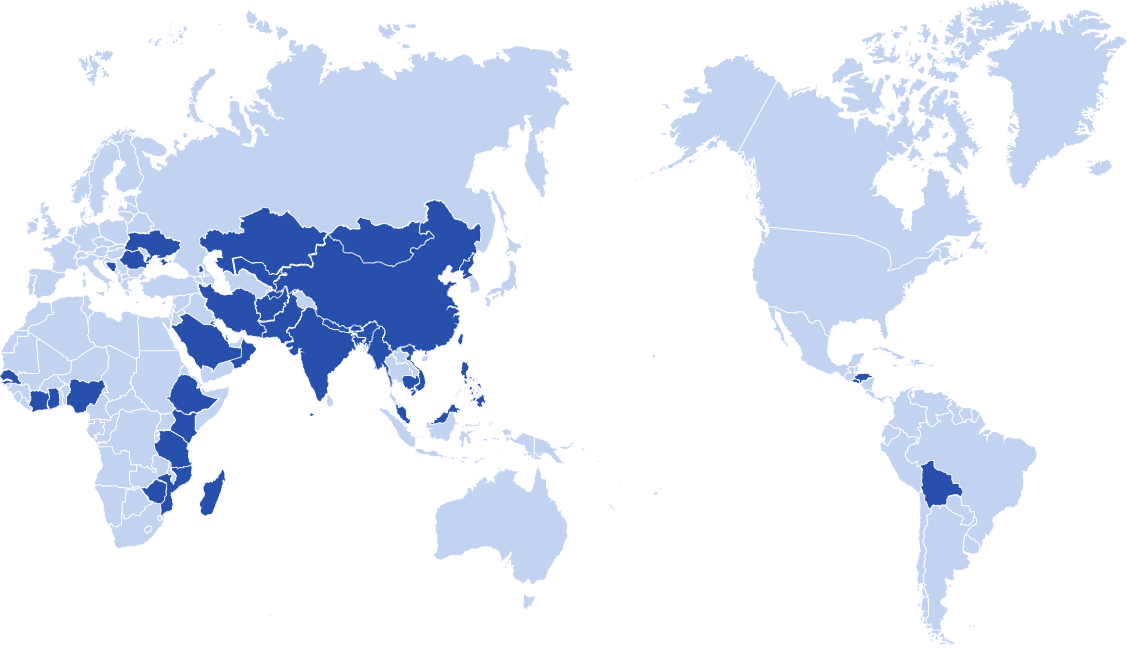
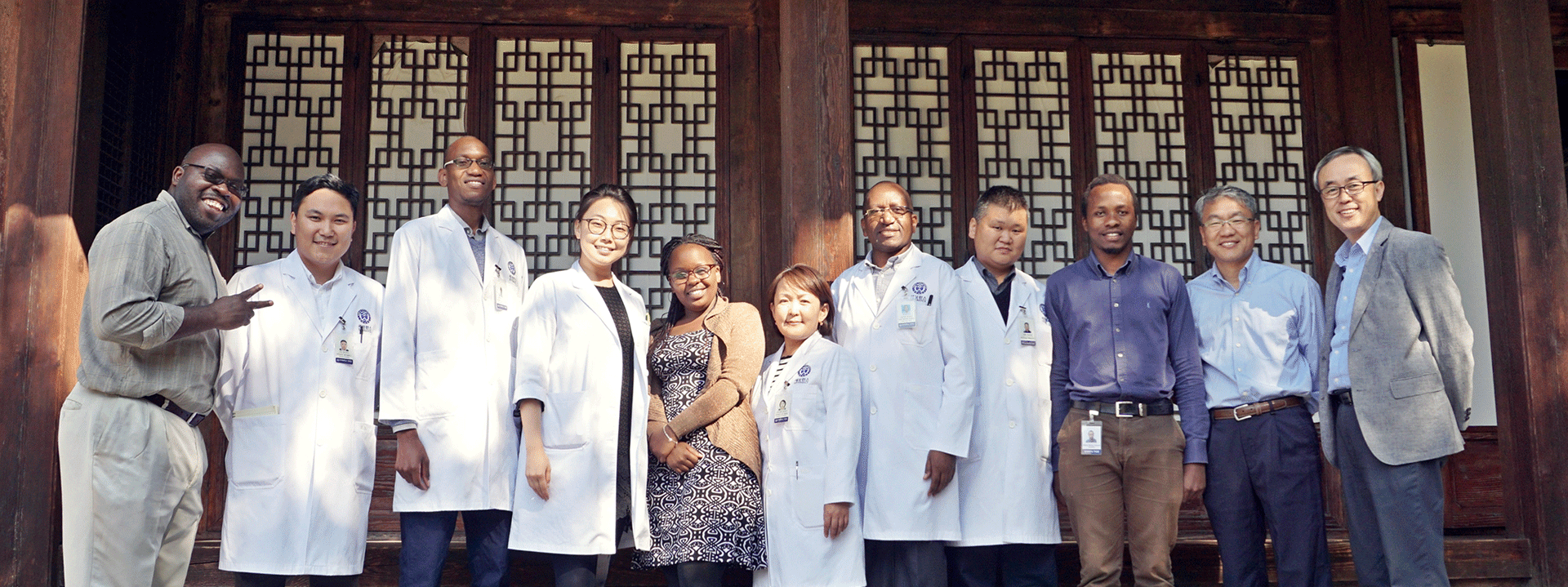
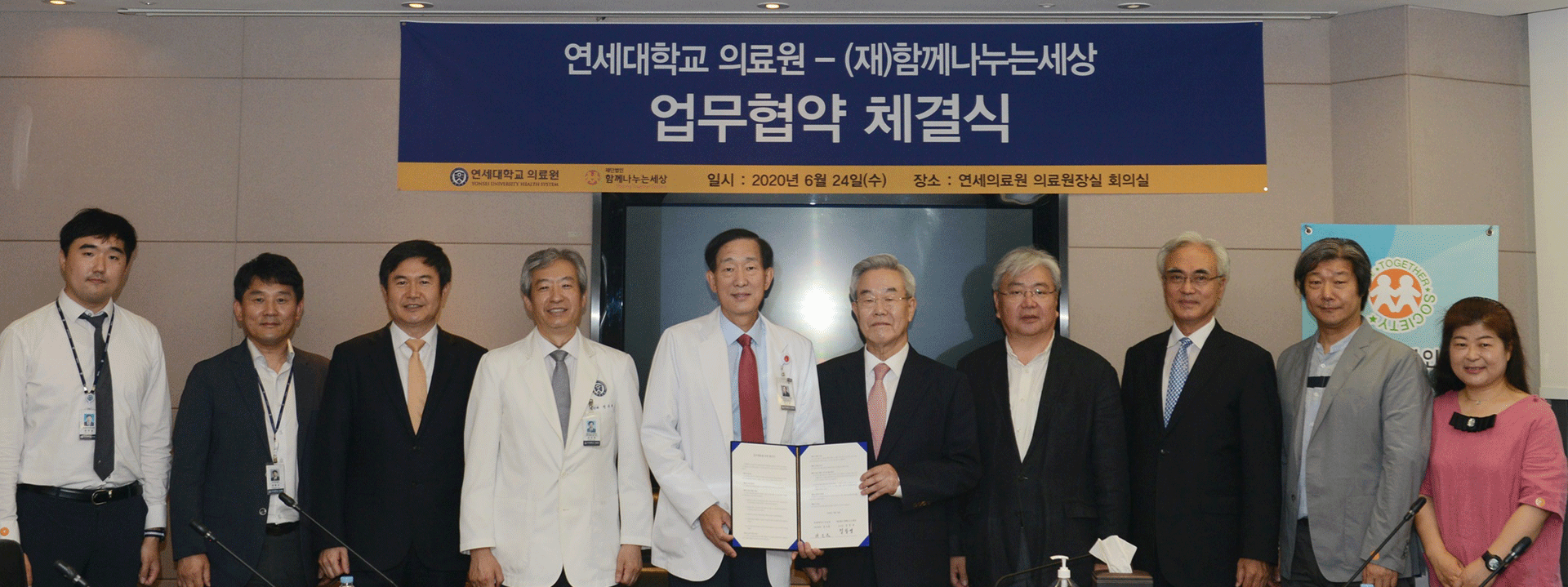
The JW Lee Jong-ho Foundation has signed a sponsorship agreement worth 500 million KRW to support a training program for overseas medical professionals, reinforcing its commitment to global healthcare development. Under the agreement, the foundation will provide 50 million KRW annually over the next 10 years to fund invitational training programs for medical personnel from abroad. The initiative aims to enhance the capacity of healthcare professionals in developing countries by offering advanced training opportunities in Korea. The donation agreement ceremony was held on the 22nd of last month in the President & CEO Conference Room of Yonsei University Health System. Attendees included JW Lee Jong-ho Foundation Chairman Lee Kyung-ha, CEO Shin Young-seop, Board Member Cho Ha-na, and General Manager Jung Hyun-joo. From the medical center, President & CEO Keum Ki Chang, Director of the Yonsei Institute for Global Health Park Yong-beom, Director, Division of External Affairs and Development Lee Sang-gil, and Director of the Medical Mission Center Pak Jin-yong were also present. Chairman Lee Kyung-ha explained the motivation behind the sponsorship, stating, “I believe that our citizens are able to receive some of the world’s best medical services today thanks to the support we received from medically advanced countries in the past. In return, we hope to share that benefit and compassion by supporting promising overseas medical professionals together with Severance.” President & CEO Keum Ki Chang expressed his appreciation, saying, “We are deeply grateful for the JW Lee Jong-ho Foundation’s continued partnership over the past decade. In line with the foundation’s vision, we will do our utmost to serve with compassion by nurturing talented overseas medical professionals.” Since signing its first agreement in 2014, the JW Lee Jong-ho Foundation has supported 28 overseas medical professionals from countries including Vietnam, Zimbabwe, Ethiopia, Nepal, and Mongolia, contributing to the strengthening of global healthcare capacity.
Mar 30, 2026
-
1) Please introduce yourself. My name is Teoh Chin Sheng, aged 38, a Clinical Assistant Professor and Consultant Ophthalmic Surgeon at the National University Health System in Singapore. 2) How did you get to know Severance? Why did you choose Severance as your training hospital? I became aware of Severance Hospital through its pioneering work in complex posterior segment surgery and its integrated Ocular Inflammation and Oncology Center. I selected Severance for my subspecialty training because of its exceptional volume of rare uveitic and intraocular tumor cases, together with its strong academic culture, which informs its clinical protocols. 3) How long is your training period in Korea? My fellowship at Severance Hospital spans 7 months 4) Which area did you focus on during your fellowship at Severance? I focused intensively on Advanced Medical and Surgical Retina management. This includes a dedicated sub-focus on the management of refractory uveitis, immunotherapy, and the diagnosis and treatment of intraocular oncology—particularly ocular melanoma and lymphoma. 5) What is the most impressive feature of Severance Hospital? The most impressive aspect of Severance Hospital within my specialty is its seamless, multidisciplinary “bench-to-bedside” approach to complex ocular diseases. As Korea's only dedicated eye hospital within the Severance Hospital of Yonsei University Health System, it integrates a state-of-the-art vitreoretinal surgical suite, cutting-edge ocular imaging—including swept-source OCT and ultra-widefield angiography—an in-house ocular pathology lab, and dedicated subspecialty clinics, all within a single, cohesive facility. This creates a unique ecosystem where advanced diagnostics, surgical intervention, and medical management converge, ensuring that each patient benefits from a unified, evidence-based continuum of care. 6) What are the specific contents of your fellowship program at Severance? My fellowship is comprehensively structured. As a trained ophthalmic surgeon from Singapore, my program was customized to include hands-on surgical training in complex vitrectomies for retinal detachment, macular surgery, and diagnostic vitrectomy and brachytherapy for intraocular tumors. In clinic, I am deeply involved in the diagnostic work-up and long-term management of uveitis patients, including the use of advanced immunosuppressive therapies. 7) If you were to get the chance to come back, which field of clinical study would you like to focus on? If given the opportunity to return, I would focus my clinical and research efforts on the intersection of uveitis with intraocular melanoma and lymphoma—a field that demands nuanced understanding of both ocular immunology and oncology. I am keen to collaborate on research into novel diagnostic biomarkers in aqueous and vitreous humor, optimization of intravitreal chemotherapy protocols, application of plaque brachytherapy in non-melanoma ocular malignancies, and the long-term visual and systemic outcomes of these complex patients, leveraging Severance’s extensive patient registry. 8) Who are you most thankful for at Severance(who helped you the most) & why? First, I would like to thank Yonsei University Health System for providing me the opportunity to join the Severance International Fellowship. I am especially grateful to my supervisor, Associate Professor Christopher Lee Sengkyu, whose mentorship has been transformative. He combines technical virtuosity in the operating room with profound compassion in clinic, coaching me through intricate surgical techniques, emphasizing meticulous diagnostic evaluation in uveitis, and modeling clear, empathetic communication for difficult oncology diagnoses. His door was always open for discussion, which greatly fostered my skills and confidence. I also extend sincere thanks to Mr. Gyeongmin Park and Ms. Soojin Kim from International Medical Training & Affairs for their flawless coordination and support throughout the fellowship. 9) What was your first impression of Korea? This is my third visit to Korea. My first impression was of a vibrant, orderly contrast: Seoul appeared as a dazzling metropolis of futuristic technology and relentless efficiency—mirroring the surgical precision I value—yet it was beautifully balanced by moments of genuine warmth. Whether it was a senior colleague gently guiding me through a social custom, the serenity of a neighborhood park, or the immediate sense of community I felt within the hospital as a newcomer, the experience was both exhilarating and welcoming. 10) What is the best memory so far during your stay here? My most cherished memory to date remains my time in the SIF Prime Course, a truly vibrant and enriching experience. The classroom was a microcosm of the world, buzzing with a dozen different languages and cultural perspectives, all united by a shared sense of purpose. A particularly special aspect was learning Korean together before our fellowships began. Our engaging and lovely teacher, Ms. Wonhee, made every lesson a joy, equipping us not just with vocabulary, but with the heartfelt tools to connect with future patients and colleagues in the hospital. That unique blend of global friendship and purposeful preparation made it unforgettable.
Mar 5, 2026