-
-
80
- 작성자제중원보건개발원
- 작성일2024-03-11
- 219
- 동영상동영상
-
My name is Dr Allan Ngulube , I am a Consultant General Surgeon based at Mpilo Central Hospital a 1000 bed government referral hospital in Bulawayo the second largest city of Zimbabwe. I am married to Sehliselwe and together we have two daughters Allison (9) and Sinovuyo (5). I first heard of Severance Hospital in 2017 from a Zimbabwean colleague of mine, an ENT Surgeon, who was on his way to Severance for a fellowship, he in turn introduced me to a Korean Missionary couple Dr Jin (Paediatrician) and Prof Kang (Pharmacologist) who are both Severance Alumni and currently based in Harare teaching at the University of Zimbabwe. A few months later I also applied for a fellowship at Severance with interest in Gastrointestinal Surgery and I was accepted for the fellowship from April to June 2018. From the time I came from the fellowship to date, I have been in touch with the Severance hospital team particularly the Medical Mission Centre which frequently shares online the experiences of other fellows who are constantly visiting Severance and there are occasional physical visits to my country by the Severance Medical Mission Centre team who come to visit Avison fellows as well as medical students under various mentorship programs where we meet, discuss and fellowship together, these shared experiences and visits are a source of strength and hope when we face difficult times in our own centres. Over the course of the years, I have also recommended a few colleagues who were interested in different fellowship programs at Severance and some have actually participated in fellowship programs. I have had the priviledge of successfully applying and being awarded the Avison Global Health Project Fund for 2022/23 that we have used at my local hospital to assist in repairing endoscopy machinery and also to purchase oesophageal stents plus endoscopy accessories for use mainly in assisting disadvantaged oesophageal cancer patients. In June 2023 we had the honour of having a visiting team from Severance Hospital Medical Mission Centre (Prof Pak Chin, Prof Choi , Prof Kang and Dr Jin) coming to Mpilo Hospital, this is the first time the team has visited our city, their visit left a lasting impression to our hospital administrators and from the interactions a few colleagues from my institution have established contact for application for future fellowships. In addition to the routine burden of general surgical work , I currently teach Medical and Nursing students plus Specialist Surgeons in training from the local medical and nursing schools. I am also running, on behalf of the Mpilo Department of Surgery, an endoscopy unit whose special target is to assist in palliative care for oesophageal cancer patients but we are also extending our service to other non cancer admitted patients with urgent issues requiring endoscopy. As it stands, our hospital is the only Government referral hospital that is offering that service of palliative oesophageal stenting in the southern half of the country courtesy of the Avison Grant fund. Previously our hospital had last offered any form of flexible endoscopy services around 1999 therefore since then, most patients requiring the services had to seek services in the private sector which tended to be very expensive and unreachable to many. Since resuming endoscopies, our patients now get treatment earlier unlike previously where inconclusive diagnoses delayed treatment by days to weeks while awaiting investigations. The work we have started doing, particularly in endoscopic work is largely satisfying not only because of the visible improved quality of life in the patients we attend to, but also because skills are being transferred to theatre nurses, junior doctors and trainee surgeons. Personally my faith has been greatly strengthened and I am always looking forward to a brighter future. Our most significant need is of quality modern diagnostic and therapeutic endoscopy equipment specifically we lack both flexible and rigid minimally invasive surgery equipment, currently we have a single improvised Olympus CLV260 endoscopy tower (repaired with the Avison Grant fund), the tower is equipped with a single (1) flexible colonoscope and a single (1) gastroscope - this grossly limits the number of patients that can be served at any time due to infection control issues, I think addition of a few more gastroscopes for that tower or a more modern system with more than one gastroscope would go a long way in improving access to diagnostic and therapeutic services, additionally our hospital does not have a single laparoscopy tower and the existing endoscopy tower does not have components that allow it to be retrofitted to allow for rigid endoscopy/laparoscopy to be performed on it therefore most surgical procedures done at our centre are invasive and this impacts on patient’s outcomes. Our national economy has been and still is struggling and this presents a number of challenges especially in purchasing and sometimes maintaining equipment as availability of funds is uncertain, the other challenge on a clinical level is that of keeping up to date with changing trends in patient care as our institution only offers procedures that have since been discarded in other parts of the world as surgical innovations improve. On being granted the award – I feel deeply humbled and am grateful for the recognition of our small efforts. I however believe that though the award is being given to me as an individual it truly belongs to the entire Department of Surgery at my hospital and is coming as recognition to all the support staff who serve the population untiringly under difficult conditions and with very little resources. God has been gracious and I have so much faith that the future holds greater things for us.
-
78
- 작성자제중원보건개발원
- 작성일2023-12-14
- 545
- 동영상동영상
-
1) Please introduce yourself. I’m Daniel Wilfredo Banegas Carrasco, 28 years old, I was born in Tegucigalpa, Honduras. My family consists of my father, Wilfredo, my mother, Lilibeth and I have two siblings, my older sister, Isi, and my younger brother, Gabriel. Also, my future wife, Scarlet. 2) Where is your working place back in your country and what is your specialty? I work as a Dental Surgeon at Dentis Clinica Integral and Clinica Dental Trinidad. 3) How did you get to know Severance? Why did you choose Severance as your training hospital? I was introduced to Severance Hospital by my mentor and friend, Korean American Missionary, Dr. Chan Hyeok Jeon, who’s been serving in Honduras for the last 13 years. Dr. Jeon as a Yonsei University graduate himself invited me to participate in the Avison International Fellowship program and shared with me the history of how this hospital was founded, without a doubt, I was more than willing to apply. 4) How long is your training period in Korea? My training period in Korea is for 1 year. 5) Which area did you focus on during your fellowship at Severance? I’m training in Oral and Maxillofacial Surgery, I had the opportunity to rotate between the two areas offered by the department which are Oral Cancer & Reconstruction, and Dentofacial Deformity. 6) What is the most impressive feature of Severance Hospital? I’m genuinely impressed by the amazing human resources Severance Hospital has because even though it is one of the most technological and advanced hospitals in the world, all the people who work at Severance are giving all the dedication humanly possible to move along with the workflow and demand, as well as their academical and professional capacity. I believe without their dedication and mindset; it would be impossible to be one of the best hospitals in the world. 7) What are the specific contents of your fellowship program at Severance? My training program covers: 1. Diagnosis and treatment of Dentofacial Deformity such as orthognathic surgery and cleft lip and palate surgery. 2. Basic implant surgery, bone grafting techniques, and sinus lift surgery. 3. Treatment in oral and maxillofacial surgery such as facial trauma, salivary gland disease, and temporomandibular joint disease. 4. Oral Cancer and Reconstructive Surgery 8) If you were to get the chance to come back, which field of clinical study would you like to focus on? If I have the opportunity to come back, I will be again in oral and maxillofacial surgery. 9) Who are you most thankful for at Severance(who helped you the most) & why? I’m very grateful to many people, but I’m deeply grateful to Professor Dong-Wook Kim for his time and dedication during my time in Severance. I have to thank all my professors who opened the doors to me, Chairman Prof. Woong Nam, Prof. Hyung Jun Kim, Prof. Jin Hoo Park, Prof. Jun-Young Kim, Dental Hospital Director Prof. Young-Soo Jung, Emeritus Prof. Hyung-Sik Park and College of Dentistry Dean Prof. Kee Joon Lee. Also, I'm very grateful with all my heart to the fellows, residents, interns, dental hygienists, nurses, and hospital staff who were always polite, kind, and willing to help me. Last but not least I’m thankful to the Medical Mission Center team, and director, Dr. Chin Yong Pak. 10) What was your first impression of Korea? When I got off the plane all I could say was “WOW!”. I was so impressed by the technology, the transportation system, how organized, safe, and clean everything is, and the food is very delicious. 11) What is the best memory so far during your stay here? During my time in Korea, I’ve had so many memories, I’ve built relationships, I’ve made so many friends, and learned so much. I will carry all these memories once I return to my country. But the most beautiful memories were to be visited at the hospital by Dr. Chan Hyeok Jeon and Dr. Eunice Park, I’m very thankful to them and their dedication to my country. My heart was so happy when I met them this time, not in Honduras, but in Korea.
-
76
- 작성자제중원보건개발원
- 작성일2023-12-14
- 638
- 동영상동영상
-
1) Please introduce yourself. My name is HENG Chhayroud, I am 30 years old. I am the youngest child in a family with 4 members. I have one older sister and one older brother. 2) Where is your working place back in your country and what is your specialty? Currently, I work as a general cardiologist at Calmette Hospital in Phnom Penh, the capital city of Cambodia. 3) How did you get to know Severance? Why did you choose Severance as your training hospital? Well, it's a long story. First, I got to know Severance from a senior of mine who was also a fellow in electrophysiology at severance. Then I got the chance to meet Professor Chun HWANG in Cambodia who introduced me to Professor Hui-Nam PAK, my responsible professor at Severance Hospital. I choose Severance Hospital for my fellowship because this hospital is well-known as one of the biggest hospitals in Korea and also in Asia. With the advanced technique here I believe I could become a well-trained doctor to serve back my country when I finish. 4) How long is your training period in Korea? My training period is for 1 year which started from 1st March 2023 until the end of February 2024. 5) Which area did you focus on during your fellowship at Severance? I am currently a fellow in Electrophysiology, a subspecialty of cardiology that enrolls in the treatment of patients with heart rhythm disorders. And my supervising professor is Professor Hui-Nam PAK. 6) What is the most impressive feature of Severance Hospital? Severance Hospital has a long history and is renowned for its high-quality medical services, advanced technologies, and skilled medical professionals. The hospital’s state-of-the-art facilities and cutting-edge technologies create an environment that fosters learning and innovation. Having an opportunity to train at Severance Hospital is a transformative journey that shapes me into a competent, compassionate, and globally-minded healthcare professional. The combination of outstanding medical resources, expert guidance, diverse patient cases, and exposure to a unique cultural setting creates an unforgettable and enriching experience that will leave a lasting impression on my medical career. 7) What are the specific contents of your fellowship program at Severance? The specific contents of my fellowship here is electrophysiology which focus on the both medical treatment and intervention like radiofrequency ablation or cryoablation of arrhythmia those include supraventricular tachycardia (SVT), Atrial fibrillation (AF), ventricular arrhythmia (VA). Furthermore, also I am training in managing the Cardiac Implantable Electronic devices include Pacemaker (PM), intracardiac implant defibrillator (ICD) and Cardiac resynchronize therapy (CRT). At last, of course I also enroll in some of research activities too. 8) If you were to get the chance to come back, which field of clinical study would you like to focus on? If I have the chance to comeback, ventricular arrhythmia is one of the things I would like to focus on. It’s a life-threatening condition, but yet by understanding the mechanism of the disease we can help to treat those patients that need help. Also, it is also interesting as when we talk about ablation procedure it’s a kind of brainstorming, many things that we need to keep in mind included understanding well about cardiac anatomy, localization of the focus using ECG, imaging, mapping technique and signal interpretation. Additionally, I am interested in Left atrial appendage device occlude and I would like to dig deep into the conduction system pacing as well, as these are the new developing technique in electrophysiology. 9) Who are you most thankful for at Severance(who helped you the most) & why? First of all, I am extremely grateful to my responsible professor Hui-Nam PAK, he made significant contributions to the field of electrophysiology and has a reputable profile in the medical community. He keeps inspiring me, teaching me and also give me very good advice everyday so I can keep on a good progress in my training. Also, I would like to thank to Professor Chun HWANG, visiting professor of Severance, for his sponsorship toward my training here, without him I might not be possible to train here. He is a pioneer and world known Electrophysiologist. I learned so much things from him especially in complicated ECG analysis and EGM signal interpretation. Additionally, I also thank to all the professor at the EP lab including Professor Bo-young JOUNG, Professor Jae-son UHM, Professor Tae-Hoon KIM, Professor Dae-Hoon KIM. They are very professional and kind toward all the fellows. I deeply appreciate their kind assistance. Lastly, many thank for the kindness and generous of all the EP fellows, EP lab team including EP nurses and EP technicians. 10) What was your first impression of Korea? Certainly, Rapid technology innovation and advancement is the first thing that impress me but also there are many more things like rich in cultural heritage, traditional villages with a unique architecture. I also like Warm hospitality of the people here and I feel amaze that Korea is a very safe country to live, even in late night I can walk alone without worrying about the robbery or something. There are also many and many more thing to impress including delicious cuisine, Beautiful landscape and also the strong work ethic and commitment of Korean peoples. 11) What is the best memory so far during your stay here? There have many best memories here starting from the first month here in Korea, I have the chance to meet friends from the others countries during the Prime course training of the international fellowship and we still hangout sometime. Then I still remember the first time I am successful in positioning the catheter in the coronary sinus and also my first time in successful did the transseptal puncture. I also feel amaze about the view and architecture of the many palaces and museum I have been too. Bukchon Hanok village is also an interest place to visit for me. And I am looking forward to explore more amazing places of this wonderful country.
-
74
- 작성자제중원보건개발원
- 작성일2023-10-24
- 894
- 동영상동영상
-
1) Please introduce yourself. My name is Lim Shu Yu, I am 38 years old. I came from a family of teachers and am the eldest in my family, I have a younger sister and also a younger brother, and of course not to forget our precious family dog, Mishka! 2) Where is your working place back in your country and what is your specialty? I work in Kuala Lumpur, the capital city of Malaysia. I am an Upper Gastrointestinal and Bariatric Surgeon. 3) How did you get to know Severance? Why did you choose Severance as your training hospital? Well, it started with my mentor back in Malaysia. He had trained in robotic surgery at Severance, and I could see the profound impact the training had on his surgical skills. When the time came for me to choose a place for fellowship training, he was the one who suggested Severance. He described it as "the best robotic surgical center" in the world, and coming from someone I respect, this recommendation carried a lot of weight. Furthermore, Severance is renowned for its pioneering work in the field of robotic surgery. Knowing that I wanted to specialize in this area, it just seemed like the perfect fit. The opportunity to learn from Professor Hyung Woo Jin, who is a world-class expert in robotic gastric surgery, was something I couldn't pass up. 4) How long is your training period in Korea? My training period is 6 months, from March 2023- August 2023. 5) Which area did you focus on during your fellowship at Severance? My training has been primarily centred on robotic upper gastrointestinal surgeries. In particular, we've been focusing on gastric cancers, which is a prevalent issue in this region. Severance also handles a high number of laparoscopic cases, It's a valuable opportunity to refine my skills in both types of minimally invasive surgeries and understand their distinct advantages in different clinical situations. My supervising professor is Prof Hyung Woo Jin, who has performed over 6000 cases of both robotic and laparoscopic gastric surgeries to date. 6) What is the most impressive feature of Severance Hospital? The most impressive feature of Severance Hospital is the hospital's commitment to integrating the latest technologies into medical practice. The state-of-the-art infrastructure coupled with a dedicated focus on innovation is truly amazing. Besides having an exceptional robotic surgery system, they are also developing an AI navigation system that will improve precision in surgeries and reduces complications, 7) What are the specific contents of your fellowship program at Severance? My fellowship program at Severance is centred on Robotic and Minimally Invasive Surgery in the Upper Gastrointestinal Field. This involves training and practice in performing and managing surgeries using robotic assistance, especially in gastric cancer. The fellowship also provides opportunities for research, allowing me to be involve in clinical studies and trials. Furthermore, the program encourages us to participate in various conferences and workshops. I have had the opportunity to participate in the Korean Society of Endo-laparoscopic and Robotic Surgery 2023 (KSERS 2023) conference and International Gastric Cancer Congress 2023 (IGCC 2023) which have further increased my knowledge and understanding of this field. 8) If you were to get the chance to come back, which field of clinical study would you like to focus on? If given the chance to come back, I would love to focus on clinical research revolving around advancing the scope of minimally invasive surgical techniques in upper gastrointestinal surgeries. More specifically, I'd be interested in how artificial intelligence can further improve surgical outcomes in the field of upper gastrointestinal surgery. 9) Who are you most thankful for at Severance(who helped you the most) & why? I've been incredibly fortunate to work with a group of supportive and talented individuals at Severance, and it's hard to single out just one person. Of course, I'm immensely thankful to Prof Hyung Woo Jin. His guidance and expertise have been invaluable in shaping my professional growth, and his unwavering dedication to the field of surgery is a constant source of inspiration. Equally, I must thank the other professors, fellows, and residents in the department. Their patience and willingness to answer my questions have made my training here smooth and enlightening. The hospital's nurses and physician assistants also deserve a shout out, they've provided invaluable help along the way, their dedication and efficiency still amaze me up to this day. I'd be remiss not to mention my wonderful international friends. We've had a blast exploring Seoul together, and their companionship has made my time here feel more like home. And finally, a huge thanks to Mr. Hans from the international office. His assistance and support have made navigating life in a new country a whole lot easier. 10) What was your first impression of Korea? From the moment I arrived, I was amazed by how modern and safe it felt, especially as a woman traveling alone. The transport system was one of the first things that stood out to me – it's simply one of the best I've ever seen. Oh, and let's not forget the coffee. As a self-confessed coffee addict, I can honestly say I found my personal heaven here. The cafes are not only incredibly aesthetically pleasing, but they also serve some of the best coffee I've ever tasted. So yeah, my first impression of Korea? It’s modern, safe, beautiful, and delicious – all at once! 11)What is the best memory so far during your stay here? My time in Korea has been filled with so many memorable moments, of course, gaining knowledge and experience in robotic gastric surgeries has been an incredible journey, but I think the friendships I've developed here have been equally meaningful. I've been fortunate to connect with both Koreans and other international fellows, and we've had such a blast together. Exploring the local attractions, hiking in the beautiful outdoors, and indulging in Korea's delicious food and drink – these shared experiences have made my stay here unforgettable. Honestly, they've become like a second family to me here in Korea. The camaraderie, the mutual support, and the sheer fun we've had together – these are things I'll always cherish.
-
72
- 작성자제중원보건개발원
- 작성일2023-10-24
- 692
- 동영상동영상
-
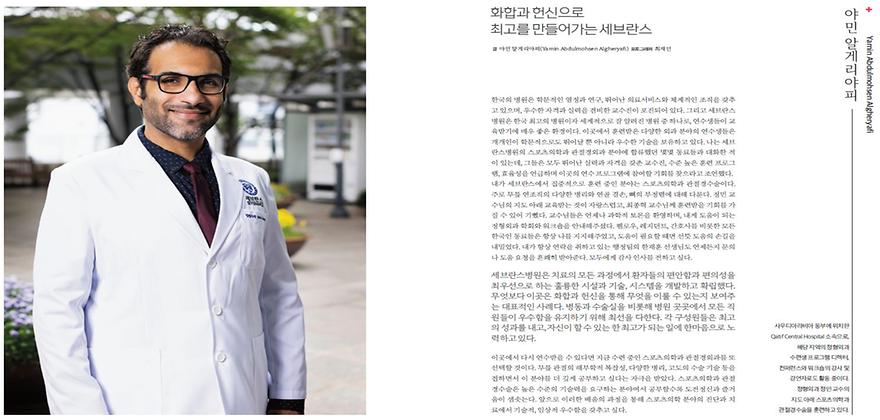
1) Please introduce yourself. I am AlGheryafi Yamin, 38 years old, from Saudi Arabia. In addition to me, my family consists of my wife, who is a pharmacist and a two year old son. 2) Where is your working place back in your country and what is your specialty? I am working in Qatif Central Hospital. Qatif Central Hospital is one of the major hospitals in the eastern region of Saudi Arabia, which includes most of the medical and surgical subspecialties. It is also considered as trauma center, as it receives a lot of trauma patients who require surgical interventions. Since the end of 2009, I joined Qatif Central Hospital and worked as orthopaedic resident, then in 2011, I joined the Saudi board program of orthopedic surgery and took training rotations in most hospitals in the eastern region and succeeded in obtaining the certificate of Saudi board at the end of 2016. Since then, I have been working at Qatif Central Hospital as orthopaedic surgeon, in addition to being the local program director of orthopaedic trainees and active lecturer and speaker in local orthopaedic surgery conferences and workshops. 3) How did you get to know Severance? Why did you choose Severance as your training hospital? South Korea is highly recognizable area to conduct clinical fellowship training as it has highly advanced medical services, excellent organized hospitals and highly qualified and excellent skill-full professors known worldwide in addition to their academic passion and research. Severance hospital is one of the best institutions in South Korea and it is well known worldwide. It has very excellent established atmosphere for trainees. A lot of our colleagues with different surgical subspecialties who conducted their fellowship in severance hospital, they are qualified with excellent skills in addition to the academic personal aspect. I have talked with some colleagues who joined knee sport and arthroscopic surgery department in severance hospital, all of them talked a lot about very skills full and highly qualified professors, quality and efficiency of training and they advised me to seek an opportunity to join knee sport and arthroscopic surgery fellowship training in Severance hospital. 4) How long is your training period in Korea? 15 months 5) Which area did you focus on during your fellowship at Severance? My training is mainly on knee sport and arthroscopic surgery. I am proud to train under supervision of Professor Jung, Min. and also it is my pleasure to have the opportunity to train with professor Chong-Hyuk Choi. 6)What is the most impressive feature of Severance Hospital? Severance hospital has excellent developed and established facilities, technology and structures that are critical to prioritize the patient’s comfort and convenience at each stage of their journey. Severance hospital is a prime example of what can be achieved through harmony and dedicated work. With a vast number of facilities, beds, and operation rooms, the staff consistently demonstrate their utmost commitment to excellence. Each member strives to give their best performance and collectively work towards being the best they can be. 7)What are the specific contents of your fellowship program at Severance? My clinical fellowship training is knee sport and arthroscopic surgery, mainly deal with knee different soft tissue pathology, cartilage defect and bony malalignment. 8)If you were to get the chance to come back, which field of clinical study would you like to focus on? If I am lucky and have the chance to comeback, I would like to be involved in the same department of knee sport and arthroscopic surgery. The complexity of knee joint anatomy, the variety of pathology, the different surgical techniques and the high level of surgical skills required, makes it truly a mind stimulating field. Knee Sport and arthroscopic surgery requires a higher level of technical skills. This makes it more challenging and hence more enjoyable. My goal is to achieve technical and clinical excellence in the diagnosis and treatment of sports conditions of the knee. 9)Who are you most thankful for at Severance(who helped you the most) & why? Since my first day at Severance Hospital I have found support from everyone. My professors are always welcoming to scientific discussion at any time and they guide me to any orthopaedic conference or workshop that help me in my training. All Korean colleagues (fellows, residents, nurses and all hospital staff) are very supportive all the time and offer to help me whenever I need. Also I should mention Mr. Jae Hun Han in the International Office. I am always in contact with him and he welcomes any inquiry or assistance at any time. 10)What was your first impression of Korea? South Korea is one of the top developed countries and known as the global head in technological and industrial sectors, but what makes South Korea a much-loved country among all world is its beautiful diverse culture. South Korea has its unique culture, character, cloth, and food that differs from the world countries. Korean People are very organized and raised on respecting everybody. Diligent and hard work, filial piety and humbleness are characteristics respected by Koreans. In addition to the beauty of nature, parks, gardens, lakes and mountains, South Korea has very advance infrastructure, highly organized, advance and modern intra and inter cities transportation networks, in addition to enormous high rise buildings everywhere and any one visit South Korea will notice they take care of every single detail to make the all aspects of public facilities perfect and accessible all time. 11)What is the best memory so far during your stay here? I have many beautiful memories in South Korea. During all weekends, I gather with my friends, we have a tour in Seoul or around where there are a lots of amazing garden, mountains and other nature and then we take dinner together in different restaurants in Seoul which is special experience I will never forget.
-
70
- 작성자제중원보건개발원
- 작성일2023-08-02
- 923
- 동영상동영상
-
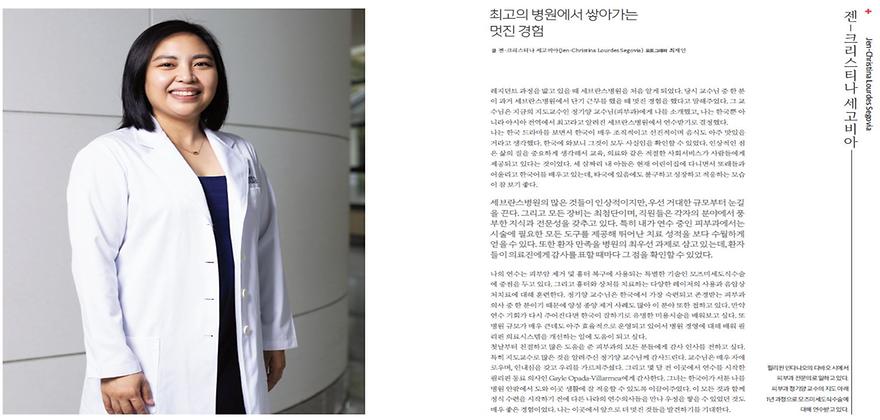
1) Please introduce yourself. My name is Jen-Christina Lourdes Quiray Segovia. My nickname is Jenna. I am 36 years old. My husband’s name is Kevin, he is a businessman. We have a 3-year-old son, Jorge Arceo, whom we lovingly call Oyo for short. 2) Where is your working place back in your country and what is your specialty? I am a Dermatologist practicing in Davao City, Mindanao, Philippines. 3) How did you get to know Severance? Why did you choose Severance as your training hospital? I got to know Severance back when I was still a resident, when one of our professors in the Philippines shared that he did a short rotation here before and had a wonderful experience. My professor then introduced me to my current mentor, Professor Kee-Yang Chung. I chose Severance because it is known to be one of the best and biggest hospitals not only in South Korea but in all of Asia. I knew I was going to be trained by one of the greatest in the field of dermatologic surgery. 4) How long is your training period in Korea? My training period is 1 year. 5) Which area did you focus on during your fellowship at Severance? My fellowship focuses on Mohs Micrographic Surgery. My supervising professor is Professor Kee-Yang Chung. 6)What is the most impressive feature of Severance Hospital? There are honestly so many to mention. The enormousness of the hospital itself is very impressive. The equipment are state-of-the-art, and the staff are all very professional and knowledgeable in their respective fields. In the Dermatology Department, we are provided will all the necessary tools to perform our procedures, making it easier for us to achieve ideal results. Patient satisfaction is also very much a priority of the hospital and you can see this through the appreciation they show our professor and the staff during their follow-ups. 7)What are the specific contents of your fellowship program at Severance? My training focuses on Mohs Micrographic Surgery and Reconstruction, which is a technique used specifically for the removal of skin cancers and the repair of the defects left behind. We are also exposed to wound care with negative pressure wound therapy as well as the use of different lasers for the treatment of scars and wounds. With our professor being one of the most skilled and highly-respected dermatologic surgeons in Korea, we are also exposed to a number of cases involving the removal of benign tumors. 8)If you were to get the chance to come back, which field of clinical study would you like to focus on? Given the opportunity to come back, I would love to be exposed more on the aesthetic aspect of dermatology. South Korea is known for beauty and cosmetic procedures and I would love to be able to experience these first-hand. I would also like to learn a bit on hospital management as the hospital is very efficient despite it being very large. I would love to bring this knowledge back home to help improve our healthcare systems. 9)Who are you most thankful for at Severance(who helped you the most) & why? I am most thankful for everyone at the Dermatology Department – the residents, nurses, and my co-fellows – as they have all been nothing but kind and helpful since my first day. I am also learning so much from my mentor Professor Kee-Yang Chung – he is very gracious with his knowledge and is very patient in teaching us. Special mention goes to my co-fellow from the Philippines, Dr. Gayle Opada-Villarmea, who started training here a few months earlier. Being in a different country and not being versed in the language is really daunting and she was able to help me ease into life here by guiding me inside and outside the hospital. 10)What was your first impression of Korea? Prior to coming here, my exposure to Korea was only through K-dramas. I saw Korea as very organized and advanced. I also imagined the food to be very delicious as it is a focal point in many shows. These were all proven to be true – the transportation system is very efficient, and all the restaurants and cafes we have gone to are all very good. Also, one of the most impressive things about Korea is how quality of life is given much importance. Social services such as proper education and healthcare are made available to majority of its citizens, with foreigners such us myself included. 11)What is the best memory so far during your stay here? One of my best memories so far is being able to share this experience with my family. Our son is currently in daycare (어린이집) and he is having a wonderful time meeting new friends. He is also learning the Korean language through his daily interactions with peers, and it is a joy to see him grow and adapt despite being in a different country. The Prime Course we had prior to starting formal clinical training is also very memorable as I was able to meet other international fellows and forge friendships with them. We spend most of our free time exploring Korea together – going to various parks and museums, hiking on different mountains, and of course eating a lot of Korean food and enjoying a few drinks. My family and I have only been here for a few months, and we are looking forward to discovering more wonderful things this place has to offer.
-
68
- 작성자제중원보건개발원
- 작성일2023-07-03
- 631
- 동영상동영상
-
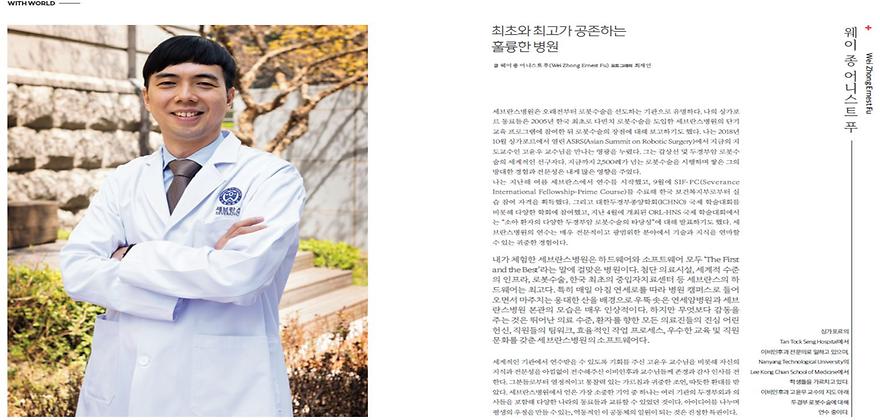
1) Please introduce yourself. Hello, my name is Ernest, and I recently turned 40 years old. I grew up in Singapore, a small but vibrant city in Southeast Asia, in a family of 5 with 2 younger siblings. My mother is currently a nursing director in the operating theatre at the Singapore General Hospital with a career spanning more than 4 decades. Her commitment to her work and compassionate care for her patients have played a big role in inspiring me to pursue a career in medicine. 2) Where is your working place back in your country and what is your specialty? After finishing my ENT residency in June 2016, I joined Tan Tock Seng Hospital, a highly-regarded tertiary hospital located in the central region of Singapore, as a Consultant Otorhinolaryngologist. Since then, I have honed my skills and developed a special interest in Head & Neck surgery. In addition to my clinical work, I am heavily involved in undergraduate medical education as the lead ENT tutor for the Lee Kong Chian School of Medicine at the Nanyang Technological University. 3) How did you get to know Severance? Why did you choose Severance as your training hospital? Severance Hospital, a prominent institution within the Yonsei University Health System, has long been regarded as a leading global center for robotic surgery. It was the first hospital in South Korea to introduce the da Vinci surgical system for robotic surgery in July 2005. In fact, many of my ENT colleagues from Singapore have attended the short-term training programs offered by the Severance Robot and MIS Center and have reported significant benefits from their experiences. Personally, I had the honor of meeting Professor Koh Yoon Woo, the current fellowship director at Severance, during the Asian Summit on Robotic Surgery (ASRS) held in Singapore in October 2018. Professor Koh is a world-renowned robotic head and neck surgeon who is the pioneer for the Robotic Retroauricular Neck Dissection for Thyroid and Head & Neck Cancer. After attending the summit, his vast experience and expertise left a profound impact on me, and I was eager to further develop my interest in robotic surgery. I am immensely grateful to Professor Koh and his department for granting me the opportunity to undergo training in the field of robotic head and neck surgery in this world-class institution. 4) How long is your training period in Korea? My training period in Korea is 1 year, from 1 July 2022 to 30 June 2023. It has been wonderful to experience the changing seasons and climates over the past 1 year. 5) Which area did you focus on during your fellowship at Severance? My fellowship at Severance Hospital has a primary focus on robotic head and neck surgery, which is due to the significant number of cases being performed at the hospital, totaling more than 450 cases every year. In addition, I have had the opportunity to gain exposure to conventional open head and neck surgeries and free flap reconstruction cases during my time here. My supervising professor is Professor Koh Yoon Woo. Under his guidance, I have been fortunate to learn from one of the world’s foremost experts in robotic head and neck surgery. Professor Koh has performed over 2500 robotic surgeries to date and has an exceptional wealth of experience and knowledge in this field. It has been an incredible privilege to work alongside him and learn from his expertise. 6)What is the most impressive feature of Severance Hospital? Severance Hospital is truly deserving of its motto “The First and the Best”, both in terms of its “hardware” and “software”. The “hardware” refers to Severance’s state-of-the art medical facilities, world-class infrastructure, and advanced medical technology and systems such as robotic surgery and the first Heavy Ion Cancer Therapy Center in the country. Every morning as I make my way down Yonsei-ro towards the hospital campus, I am struck by the impressive sight of the Yonsei Cancer Centre and the Severance Hospital Main Building towering over the Sinchon skyline, with the majestic Ansan mountain in the background. However, what impresses me even more is the “software” which refers to the excellent quality of medical care and heartfelt dedication displayed by every member of the medical staff towards their patients. The teamwork and camaraderie among the staff are exceptional, with a strong focus on attention to detail and efficient work processes. This is a great testament to the excellent training and workplace culture being fostered at the hospital. 7)What are the specific contents of your fellowship program at Severance? As a fellow at Severance Hospital, my daily schedule includes surgical training in the operating rooms, with regular opportunities to participate in outpatient clinics, ward rounds, and weekly head and neck tumor board meetings. Moreover, I had the privilege of completing the prestigious Severance International Fellowship-Prime Course (SIF-PC) in September 2022, which led to the acquisition of hands-on operating privileges being granted by the Ministry of Health and Welfare in Korea. To further enhance my academic and professional growth, I have actively participated in various ENT head and neck conferences, such as the International Conference of the Korean Society for Head and Neck Oncology (ICHNO) and the 2023 Spring Combined Workshop for Head and Neck Surgery. As a representative of my department, I delivered an oral presentation on the "Feasibility of Robotic Surgery for various Head & Neck Tumors in Pediatric Patients" at the International Congress of ORL-HNS held in April 2023. The comprehensive fellowship program at Severance Hospital has provided me with invaluable experience and exposure to a wide range of head and neck surgeries, enabling me to hone my skills and knowledge in this highly specialized field. 8)If you were to get the chance to come back, which field of clinical study would you like to focus on? Given the opportunity to return, I would be eager to continue focusing on robotic head and neck surgery. The field is constantly evolving, and I believe that staying up-to-date with the latest techniques and technology is essential for providing the best possible care for our patients. The learning curve for robotic surgery can be steep, but I am excited by the challenge and remain committed to continued growth and development in this area. Ultimately, my goal is to use the latest technology and techniques to provide the best care to my patients, and I believe that honing my skills in robotic surgery is an important part of achieving that goal. 9)Who are you most thankful for at Severance(who helped you the most) & why? I am most grateful to Professor Koh for his invaluable mentorship and the exceptional training opportunities that he has provided me with during my fellowship. He is always forthcoming in sharing his vast experience in head and neck surgery and committed in ensuring the best outcome for all his patients. His unwavering commitment to the well-being of his patients, his immense contribution to the advancement in the field of robotic head and neck surgery over the years as well as his vision for the future of robotic surgery, have been a great source of inspiration for me. I would also like to express my deepest appreciation to all the esteemed professors in the department, each of whom has generously imparted their knowledge and expertise in various aspects of head and neck surgery. From Professor Hong Hyun Jun’s enthusiastic and insightful teachings on free flap reconstruction to Professor Kim Da Hee’s valuable tips on head and neck surgery, from Professor Sim Nam Suk’s guidance on research projects to Professor Eun Chang Choi’s inspiring career journey, I have gained immeasurable insights and skills from them. A special mention also goes to Dr Lee Kyu In for his warm hospitality and assistance in helping me settle into the department, as well as to all the residents, nurses and operating assistants who have been instrumental in making my time here a fulfilling and enjoyable one. Finally, I would also like to thank Mr. Han and his colleagues from the International Office for their administrative support. 10)What was your first impression of Korea? I am very impressed with the high level of fitness among the elderly population in Korea. When I first arrived in Korea during summer, I started going on cycling trips along the Han River and hikes along the Seoul fortress wall trails during the weekends. It is a common sight to see large groups of elderly men and women engaging in such activities and using the public gym facilities in the parks. This is an indicator of the importance placed on health by the elderly in Korea and is likely to alleviate the burden on limited healthcare resources in the long run. 11)What is the best memory so far during your stay here? In addition to the exceptional fellowship training that I have received, one of the most treasured memories I have of my time at Severance Hospital was the opportunity to interact with a diverse group of individuals, including local head and neck surgeons from other institutions, as well as visiting international fellows and doctors from various countries. This cross-cultural exposure has allowed me to gain valuable insight into the unique challenges that exist both within and outside the field of medicine. It has been a true privilege to be part of such a vibrant and dynamic community where ideas are regularly exchanged, and lifelong friendships are being forged. Looking back, I am grateful for this enlightening journey that has broadened my horizons and left an indelible mark on my heart.
-
66
- 작성자제중원보건개발원
- 작성일2023-06-05
- 728
- 동영상동영상
-
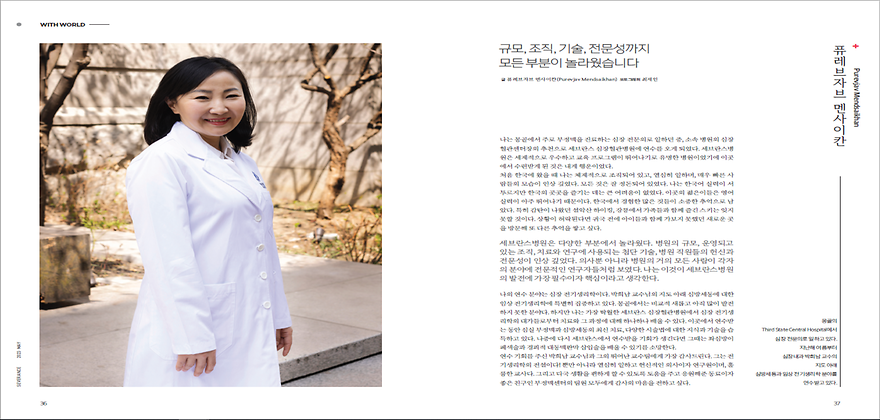
1) Please introduce yourself. mendsaikhan purevjav, 41 years old, I am married and I am a mother of two children. 2) Where is your working place back in your country and what is your specialty? Cardiologist in arrhythmia unit in State Third Hospital of Mongolia. 3) How did you get to know Severance? Why did you choose Severance as your training hospital? Severance is world renowned hospital for its excellence and educational programs. I was lucky to be referred by my cardiovascular center director to the severance cardiovascular hospital. 4) How long is your training period in Korea? From July 6, 2022 Until December 31, 2023. 5) Which area did you focus on during your fellowship at Severance? My supervising professor is Dr. Pak Hui Nam. I am focusing on clinical electrophysiology especially on atrial fibrillation. 6)What is the most impressive feature of Severance Hospital? There are many aspects of this hospital is impressive to me: - the size, organization, educational courses, advanced technology used for treatments and research, commitment of staff and of course professionalism of everyone. Almost everyone seems to be researchers besides being a doctors, which I think is essential for the development. 7)What are the specific contents of your fellowship program at Severance? Cardiac electrophysiology. This is a relatively new field in Mongolia, we are still not performing many of complicated procedures, as in Severance I have a chance to learn each and every of them from giants of electrophysiology, in Center of Excellence. To name few of the skills a would like to acquire during my stay in Severance:Ventricular Arrhythmia management, atrial fibrillation management, device implantations such as conduction system pacing, leadless pacing, CRTs etc. 8)If you were to get the chance to come back, which field of clinical study would you like to focus on? If I have a chance to come back to Severance, I would like to focus more and left atrial appendage closure and trans catheter aortic valve implantation. 9)Who are you most thankful for at Severance(who helped you the most) & why? I am very thankful to whole EP lab team for being not only supportive and helpful collègues, but also for being good friends. Life is easier when you have friends, especially when you are abroad. Of course, I am most thankful to Professor Pak Hui Nam, for giving me the chance to learn from him and his excellent team of professors! He is a legend in EP world! He is hard working and dedicated doctor, researcher, as well as excellent teacher. I can’t not to mention nursing and technical team of EP lab, as they make my life easier every day. 10)What was your first impression of Korea? well organized, hard working and very quick people! But because everything is so well organized, it was easy to get around even when you don’t speak the language! People, especially younger generation people speak very good English, so it’s easy. 11)What is the best memory so far during your stay here? There are many nice memories and I hope I am still building the best one. Just to name some: Hiking in Seoraksan was very impressive and I will not forget that sensation. We went skiing with my family in Gangneung, was also very nice memory. In general, discovering new places together with my kids is building up nice memories from Korea, that I hope we will keep with us. before going back home I wish I could travel around Korea a bit more.
-
64
- 작성자제중원보건개발원
- 작성일2023-05-03
- 901
- 동영상동영상
-
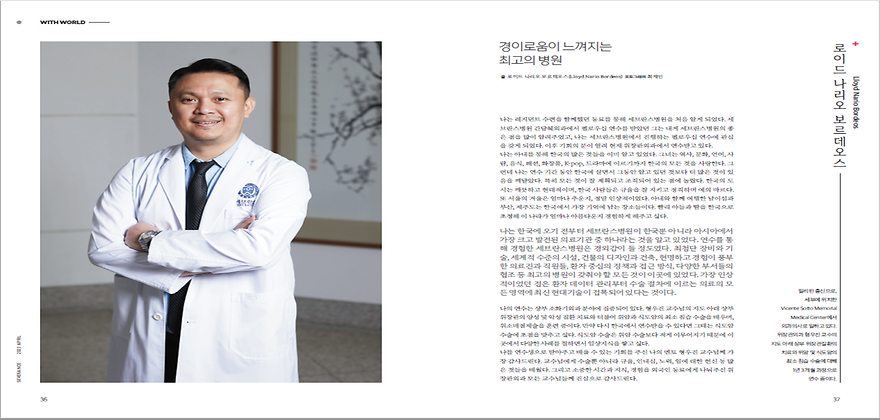
1) Please introduce yourself. I’m Lloyd Nario Bordeos, 39 years old. My wife’s name is Antoniette, she is an anesthesiologist. We have 2 children, a son named Santino and a daughter named Aryana. They are both in High School. 2) Where is your working place back in your country and what is your specialty? I am working as Medical Officer at Vicente Sotto Memorial Medical Center, Cebu City, Philippines for 12 years now in the Department of General Surgery. 3) How did you get to know Severance? Why did you choose Severance as your training hospital? I got to know Severance Hospital because of my batchmate during residency training, who had his fellowship training in Hepatopancreatobiliary Surgery here at Severance Hospital. He told me so many great and positive things about Severance Hospital that made me become interested in applying also for fellowship training in the same institution. 4) How long is your training period in Korea? 1 year and 3 months 5) Which area did you focus on during your fellowship at Severance? My fellowship training in Upper Gastrointestinal Surgery is focused on Minimally Invasive Gastric Cancer Surgery under the mentorship of Prof. Woo Jin Hyung. 6) What is the most impressive feature of Severance Hospital? Before coming here, I already knew that Severance Hospital is one of the largest and most advanced healthcare facilities not only in the country but perhaps in Asia. During my time in training, I am in awe of its State-of-the-art equipment, world-class facilities, and experienced doctors and staff. It has all the features of a topnotch hospital, from the design and architecture of its buildings, its wise leaders and administrators, its cutting-edge technology, its patient-centered policies and approach, and the coordinated care between various departments. But what impresses me most is how it integrates modern technology in every aspect of healthcare, from patient data management to surgical procedures. 7) What are the specific contents of your fellowship program at Severance? My fellowship training program covers the management of benign and malignant diseases of the Upper Gastrointestinal Tract. It focuses on Minimally Invasive Surgery for Gastric and Esophageal Cancer, with exposures also in benign Upper GI and Gastric sleeve surgery. 8) If you were to get the chance to come back, which field of clinical study would you like to focus on? If I were given a chance to come back and choose a field of clinical study to focus on, I would choose Esophageal Cancer Surgery. The reason is that Esophageal cancer surgeries are fewer in comparison to the sheer volume of Gastric cancer surgeries at Severance Hospital, and for me the more esophageal cases I get to see the more clinical knowledge I will acquire. 9) Who are you most thankful for at Severance(who helped you the most) & why? I am very thankful to all the Professors in the Department of Gastrointestinal Surgery for sharing their precious time, knowledge, and experience to us foreign fellows. I am most thankful to my mentor Prof. Woo Jin Hyung for accepting me and giving me the opportunity to train under him. I learned a lot from him not only about surgery but also about discipline, patience, hard work, dedication, and commitment to one’s craft. 10) What was your first impression of Korea? I initially knew Korea because of my wife. She loves everything about Korea, from the history and culture, language, people, food, fashion, to beauty products and K-pop and dramas. When I got to live here during the duration of my training, I noticed that there was more to it than what I already knew. I am amazed by how everything is well planned and organized. How clean and modern are the cities. How disciplined, honest, and polite the Korean people are. And how cold it is in Seoul during the winter! 11)What is the best memory so far during your stay here? When me and my wife went on a trip to Busan, Nami and Jeju Islands are so far my best memories here in Korea. I hope to bring my son and daughter here soon so they may experience how beautiful this country is.
-
62
- 작성자제중원보건개발원
- 작성일2023-04-03
- 669
- 동영상동영상
-
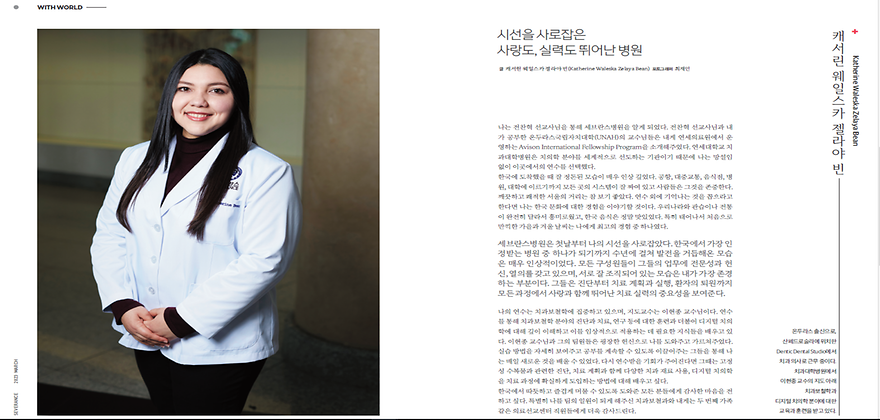
1) Please introduce yourself. Hello, my name is Katherine Waleska Zelaya Bean and I am 29 years old. There are 4 people in my family: my father, my mother and my older brother and me. 2) Where is your working place back in your country and what is your specialty? I work at Dentic Dental Studio, which is a private dental office located in San Pedro Sula, Honduras. I work as a Doctor in Dental Surgery (General Dentistry). 3) How did you get to know Severance? Why did you choose Severance as your training hospital? I knew about Severance Hospital from a Korean Missionary named Jeon Chan Hyeok 전 찬혁. He and other professors from the university where I studied (UNAH) introduced me Avison International Fellowship Program and without hesitation I chose Severance Hospital because of its high leading in education and in research in dentistry. 4) How long is your training period in Korea? My training period in Yonsei Dental Hospital is for 6 months. 5) Which area did you focus on during your fellowship at Severance? My focus area is in Prosthodontics. My supervising professor is Lee Hyeongjong, Clinical Associate Professor in Prosthodontics department. 6) What is the most impressive feature of Severance Hospital? Severance Hospital has caught my eye since first day. It is impressive how the hospital has evolved over the years, and become one of the most recognized hospitals in South Korea. Their professionalism, their dedication and enthusiasms they put in all their work, besides how organized they are, are some of the things I admired the most. From the diagnosis, treatment plan, execution of the treatment plan until the moment the patient leaves the hospital shows love and the importance of doing things well. 7) What are the specific contents of your fellowship program at Severance? The specific training contents of my fellowship are: Understanding the study of dental prosthetics Basic evaluation of dental prosthetics patients Establish a diagnosis and treatment plant for dental prosthetics patients Understanding Digital Dentistry Clinical application of Digital Dentistry Diagnose and plan using digital data integration Participation in research activities related to digital dentistry 8) If you were to get the chance to come back, which field of clinical study would you like to focus on? If I have the opportunity to come back I would like to focus on Fixed Restorations, learn more about diagnosis, treatment plans and the behavior of different kinds of dental materials, and definitely incorporating digital dentistry to the workflow. 9) Who are you most thankful for at Severance(who helped you the most) & why? I can't choose just one person. I'm grateful to everyone who made my stay so warm and enjoyable, like the staff at Medical Mission Center, who were like a second family to me; My professor Lee Hyeonjong, who helped me and taught me with great dedication in my training, together with his researcher, showed me in detail how to practice dentistry, and to continue studying, every day there is something new to learn. I thank the Prosthodontics department of the Dental Hospital for letting me be part of their team. 10) What was your first impression of Korea? My first impression when I arrived in Korea was how organized they are. No matter what field, from the moment you arrive at the airport, public transport, in restaurants, inside the hospital, at the university, anywhere, the system is well organized and people respect it. It was very good to see how clean and pleasant it is to walk the streets of Seoul. 11)What is the best memory so far during your stay here? The best memory so far, apart from the training in Prosthodontics, is getting to know the culture of Korea. It is totally different from my country, just like its customs and traditions, and of course Korean food is delicious. I enjoyed the autumn and winter weather for the first time in Seoul, and it has been one of the best experiences for me.
-
60
- 작성자제중원보건개발원
- 작성일2023-03-02
- 1186
- 동영상동영상
-
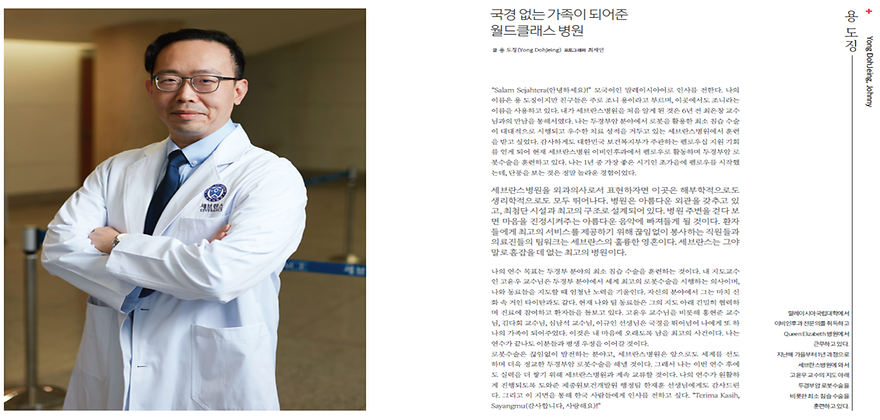
1) Please introduce yourself. “Salam Sejahtera”. A hello-greeting in the very own language of my country Malaysia. My name is Yong DohJeing. Moreover, my friends call me Johnny Yong. I have accomplished my 30s milestone and is now amidst venturing into another exciting phase of lifetime. My spouse is a Plastic & Reconstructive Surgeon, along with my parents and sibling who are currently residing in home country. 2) Where is your working place back in your country and what is your specialty? After attaining specialisation in Otorhinolaryngology from National University of Malaysia, I have been practising as a general ORL surgeon in Hospital Queen Elizabeth for 8 years with special interest in Endoscopic SkullBase and Sialoendoscopy. With the Grace of God, I am now pursuing Subspeciality in Head & Neck Surgery and heading towards Minimally Invasive Robotic Surgery as my prime passion. 3) How did you get to know Severance? Why did you choose Severance as your training hospital? My first encounter of World-Class Severance Hospital traces back to a name card honored to me by Professor EunChang Choi during our first met 6 years ago. Called it Serendipity, the contact name card is securely well-kept for years. Through Professor Choi, we learnt of Severance Hospital as the Centre of Excellence in the field of Robotic Head & Neck Oncology where minimally invasive surgery is massively practiced. As with other international fellow, I am drawn by such strong magnetism of aspiring force to be here for world-class training opportunity. 4) How long is your training period in Korea? My granted training span across 4 seasons. I commence my fellowship in early Autumn right at the best times in a calendar year. Witnessing the falls foliage has been an amazing experience. With much gratitude, under the purview of Korea Ministry of Health and Welfare, precious hands-on fellowship opportunity is made possible. 5) Which area did you focus on during your fellowship at Severance? My pursue of Robotic Head and Neck Oncology Fellowship in Severance Hospital has been made possible with the presence of Professor YoonWoo Koh as my supervisor. My prime aim is to attain maximum exposure in the field of Minimally Invasive Head & Neck Surgery. Being the World-leading Robotic Surgeon in Head & Neck, Professor Koh has tremendously engaged in teaching and guiding of all the fellows under his wings. Professor Koh is genuinely a Titan in his territory of expertise. 6) What is the most impressive feature of Severance Hospital? Both “Anatomically” and “Physiologically”. Anatomically, the Hospital is beautiful inside out. Occasionally, you may find yourself immersing in soothing music while strolling around the hospital. Modern design of façade equipped with state-of-the-art facilities, Severance is structurally built to be the best. Physiologically, the teamwork functions by the staffs who serve relentlessly in bringing the best service to patient become the soul of the body of Severance. “The First and The Best” is indeed impeccable for Severance “Anatomically and Physiologically”. 7) What are the specific contents of your fellowship program at Severance? My prime engagement of fellowship is to participate in the daily surgical activities of my team. Robotic surgery has been the core conducts in our team. Nonetheless, conventional surgery is performed too. The volume of cases attended is high. 8) If you were to get the chance to come back, which field of clinical study would you like to focus on? Robotic Surgery is an ever constantly advancing field. Severance being the world-leading team in the field of Robotic Head and Neck will be among the first in the world to attain such refinement in priority. Therefore, there is a definite desire to be back in time to come to pursue subsequent update in these field. 9) Who are you most thankful for at Severance(who helped you the most) & why? I am indebted to Professor EunChang Choi, who is the first person who refer my fellowship to Professor YoonWoo Koh, a World-Renowned Robotic Head and Neck Surgeon. Being my supervisor, Professor Koh has persevered unreservedly in sharing his utmost superb robotic skills. His phenomenal teaching has inspired me the most. I value too my group of fellow-in-training comrades who strive through the fellowship together with many valuable conducts of mutual assistances and discussions. 10) What was your first impression of Korea? Owing to the fact that my first mission on landing is house-hunting, my first impression of Korea is plenty of Bu-Dong-San (Realty). The first friend I met is a Bu-Dong-San agent who ultimately guided me to secure a place of stay for 1 year. The house-hunting experience is exciting and tiring as looking for vacant house in vicinity of Severance amidst autumn University semester commencement period is indeed challenging. 11)What is the best memory so far during your stay here? I embrace a neo-family with Severance Head and Neck Cancer Team. This is by far the best memorable occurrence etched in my heart. Under the leadership of Professor Koh, entire team has been working so closely to each other rendering eminence cares to patients. Prof HongHJ, Prof KimDaHee, Prof SimNS and Dr Kyu-In are akin to foster siblings where sharing of knowledge is borderless. Mr Han, from international office too shares credit of appreciations for my fellowship facilitation. The ending of fellowship signifies the commence of life-long friendship that is of what left much to be desired. To all in Korea, “Terima Kasih, Sayangmu” (Kamsahamida, Saranghae).
-
58
- 작성자제중원보건개발원
- 작성일2023-02-02
- 778
- 동영상동영상


![[International Office] Interview with Dr. Allan Ngulube](/app/board/attach/image/thumb_671_1702546450000.do)
![[International Office] Interview with Dr. Daniel Wilfredo Banegas Carrasco](/app/board/attach/image/thumb_670_1702546259000.do)
![[International Office] Interview with Dr. Chhayroud Heng](/app/board/attach/image/thumb_669_1698132992000.do)
![[International Office] Interview with Dr. Shu Yu Lim](/app/board/attach/image/thumb_668_1698131730000.do)